




The most stunning shades in the world are the ones found in nature. This world of possibility and diversity of colour is what first drew artist Bella Gonshorovitz to the ancient practice of making and using natural dyes.
The process of dyeing fabrics with natural dyes is exciting for many reasons, with each colour being deeply connected to the plant from which it is made (and qualities inherent to the plant’s surrounding ecosystem). Conditions of the soil, the sunlight, the time of year, the way in which material is stored, the pH level of the water, the touch of the human hand and mind handling the dye vat all have an impact on the resulting colour. Very rarely will two dyed fabric lengths end up the exact same shade. This effect mimics the organic way that colours develop in nature.
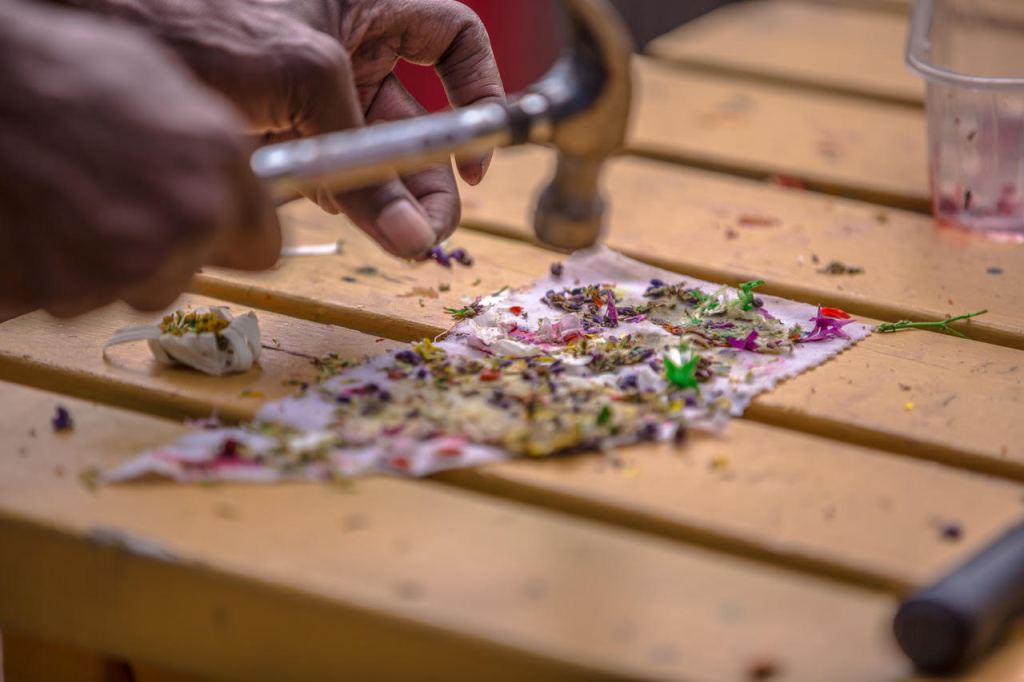
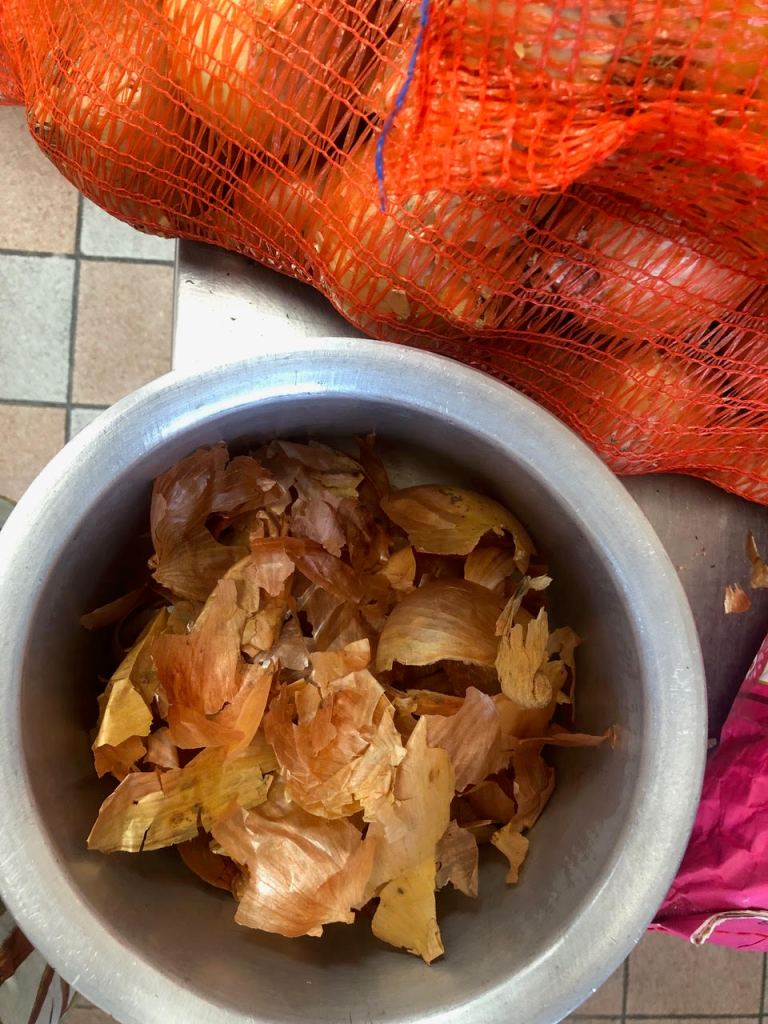
The purpose of The Hounslow Cloth project is to situate the natural dye process within the landscape and communities of the London Borough of Hounslow. The resulting artworks portray the diversity, vibrance and vitality of this environment through a series of fabric collages of cloth dyed with flowers, plants, vegetation and kitchen scraps collected from three sites across the borough.
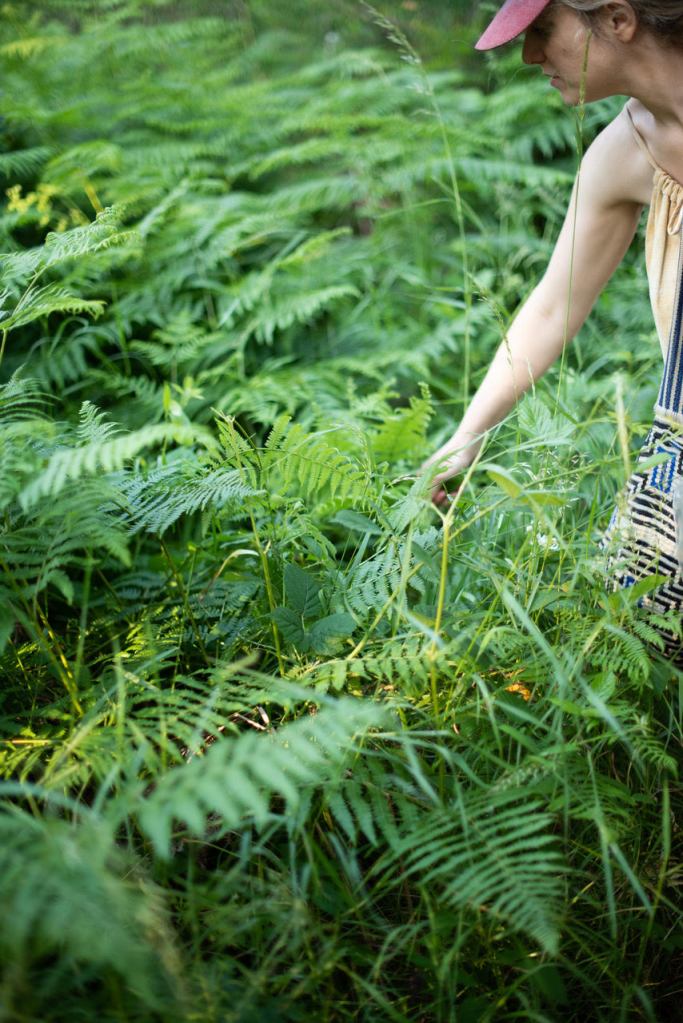
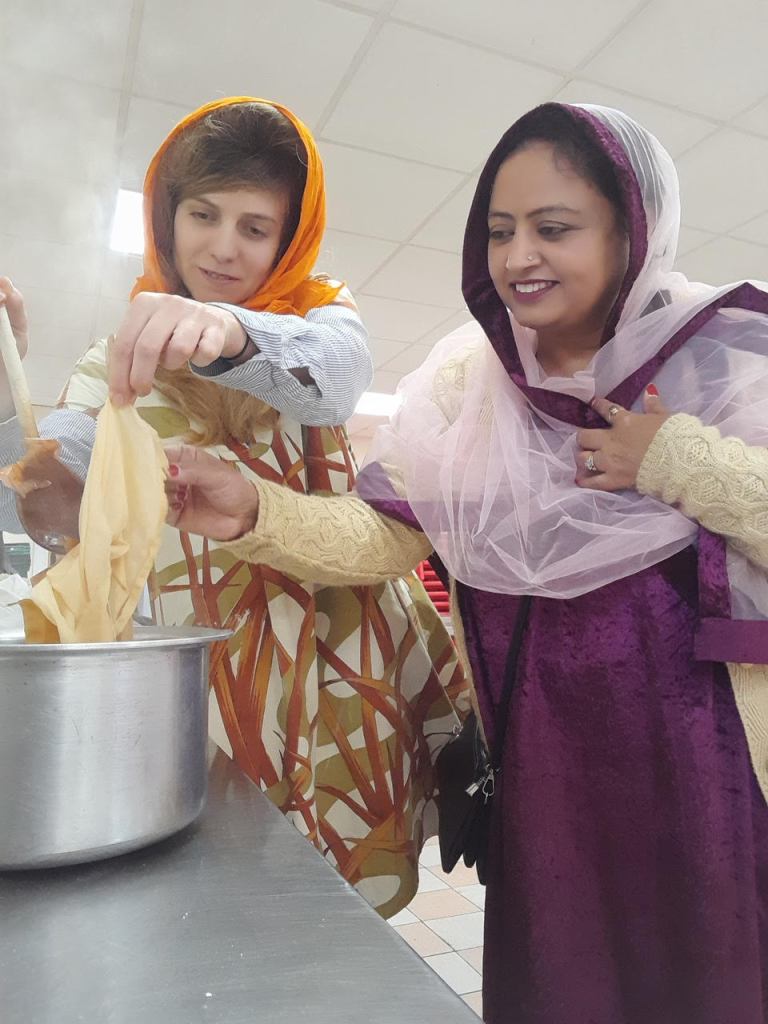
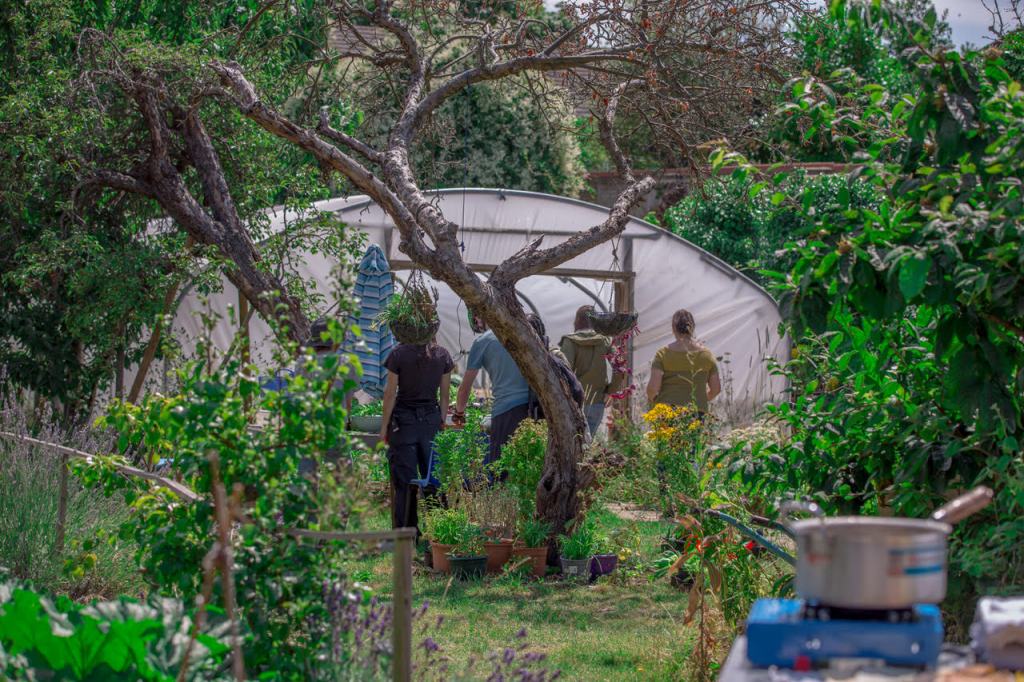
Bella selected Hounslow Heath, the Salopian Garden in Isleworth and Gurdwara Guru Nanak Nishkam Sewak Jatha as places to collect dyestuff in collaboration with members of the Hounslow Exhibitions Group and local people.
Each site was visited with the community invited to accompany Bella in collecting dyestuff; this created a rich, varied series of conversations, discoveries and sharing of knowledge between artists, gardeners, cooks, community activists and other custodians of Hounslow’s green and community spaces.
With Thanks To
Stephen Bishop and Andrew Peake of the London Borough of Hounslow Countryside Team; Mick Massie, and others who joined us on our walks on the Heath. Sally Tillson and the team and volunteers at Cultivate London. Kamaljeet Kaur and the community of Gurdwara Guru Nanak Nishkam Sewak Jatha. Cristina Schek, Lukasz Kapuscinski, and Kamaljeet Kaur for their photography that is included in the exhibition.
“I hope you find yourselves within these colours you helped achieve.” – Bella Gonshorovitz
About Bella Gonshorovitz
Bella Gonshorovitz is a multidisciplinary creative practitioner and an author. She collaborated with artists such as Cathie Pilkington RA on public art installations and exhibitions. Her debut book ‘Grow, Cook, Dye, Wear – From seed to style the sustainable way’ was published by DK/Penguin Random House in 2022, aiming to connect the dots between the practice of growing your own, cooking, natural dye and creative clothes making. Bella is passionate about working with communities, bringing the global issue of the climate crisis to our local environments through art and re-connecting us to the notion that all we consume comes from nature.
The Natural Dye Process
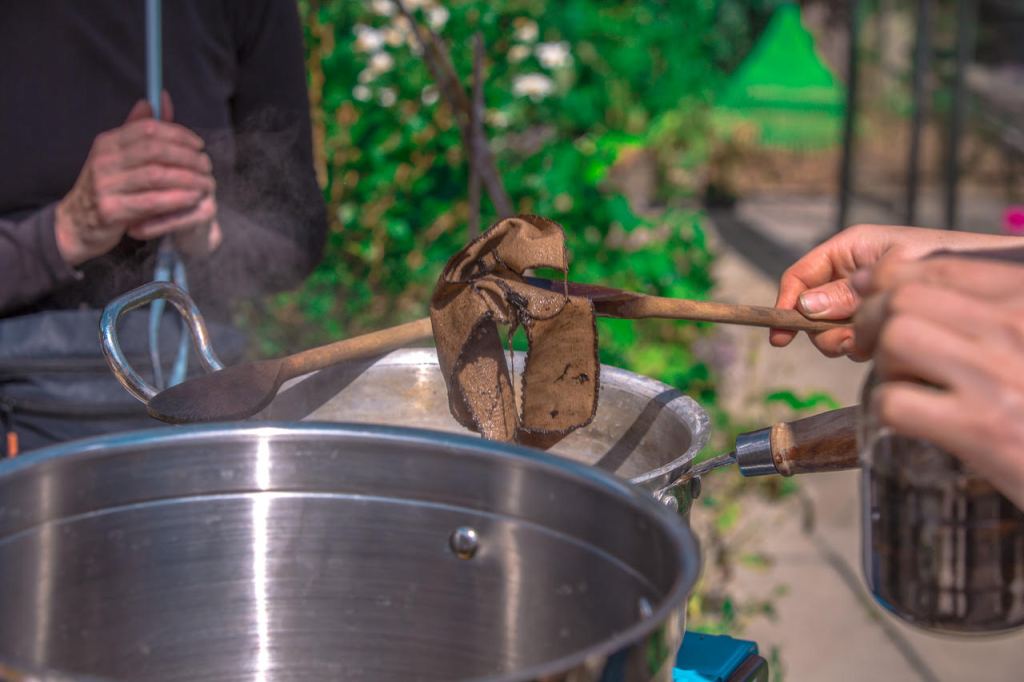
Synthetic dye was first discovered in 1856. All colours produced and documented prior to that were created using natural dye agents. Whilst there is a great deal of science behind the development and use of natural dyes, one of the loveliest aspects of this recently reinvigorated age-old is its accessibility: it is relatively easy and safe to extract colour from many plants and food waste in a domestic set up. In a nutshell, The method involves covering the dyestuff in water, applying heat for colour extraction and soaking the cloth until you reach the desired shade.
Natural dye only bonds with natural fabrics. These can be Cellulose (plant) based fibres: Cotton, Linen, Flax, or Protein (animal) based fibres: Silk, Wool – noting will shrink significantly with heat application.
To get a good, long-lasting result, the fabric needs to undergo some preparation: Pre-loved fabric will need a wash with a mild detergent. Virgin textiles will require scouring with soda crystals. The next and rather crucial step is mordanting. A mordant is essentially the dye coordinator: it helps establish a link between the colour pigment and the fibre molecules, creating a robust and lasting colour. Some dye plants would only work on fabrics that have been pre-mordanted. Others, particularly ones naturally rich in tannins, would give durable results on their own. For plant-based fibre, like the linen I used for the Hounslow Heath, I like to use an aluminium potassium sulphate or, in short, alum. This mineral salt, used in food preservation, is easy to obtain and safe to practice with ventilation.
To read more about mordanting and the natural dye process as a whole:
- Wild Colour: How to Make and Use Natural Dyes by Jenny Dean
- The Wild Dyer: A guide to natural dyes & the art of patchwork & stitch by Abigail Booth
- Grow, Cook, Dye, Wear: From seed to style the sustainable way by Bella Gonshorovitz
***
The organic nature of The Hounslow Cloth, and the fact it is to tour for a significant amount of time, led to the decision to digitally reproduce the natural colour rather than using the original dyed lengths themselves in the artwork. Despite pre-mordanting with alum, the natural dyes, particularly the more fugitive ones, would be likely to fade or lose their vitality during prolonged exposure to harsh light and challenging preservation conditions.
The original antique French linen scraps were photographed in high resolution to preserve the depth of their shades and distinctive attributes, then digitally printed on coarse linen which resembles the texture of the original cloths.
 CPP Hounslow